Understanding Stress and Suffering
Understanding Stress and Suffering
In our fast-paced world, stress is a common part of life. Everyone experiences stress from time to time, whether it’s due to work, school, or personal relationships. However, while stress is an inevitable part of life, suffering because of it is optional. Understanding this crucial difference can make a significant impact on our mental and emotional well-being.
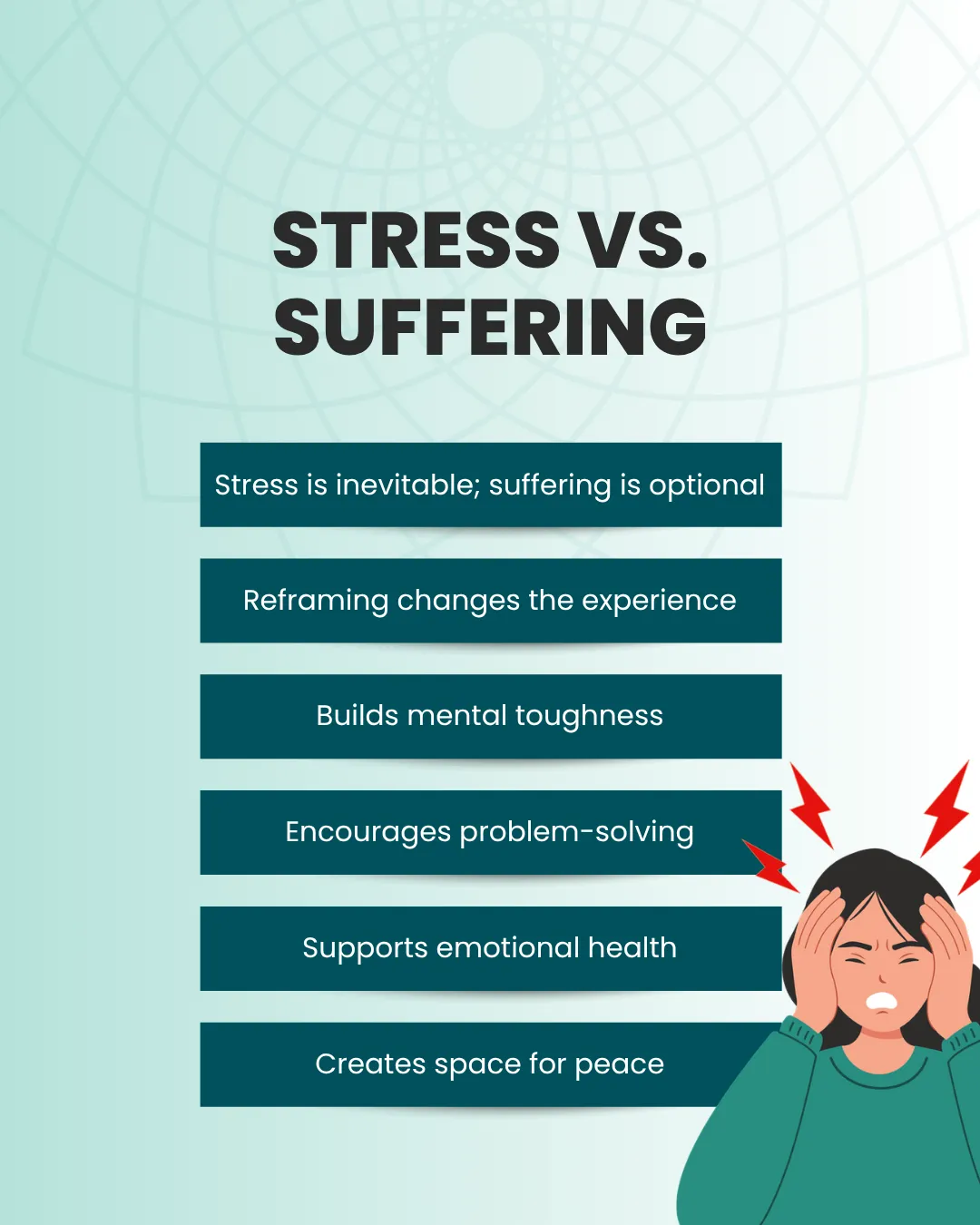
Stress Is Inevitable; Suffering Is Optional
Everyone feels stress. It’s how our body reacts to any demand or challenge. Stress can even be positive—for example, it can help you work harder for an exam or interview. However, when stress becomes overwhelming, how you respond to it can lead to suffering.
Key Points:
- Stress is a natural response to demands or challenges.
- Suffering occurs when we allow stress to dominate our feelings and thoughts.
Understanding this can empower individuals to take control of their responses to stress, potentially preventing unnecessary suffering.
Reframing Changes the Experience
One effective way to manage stress and prevent it from turning into suffering is to reframe the situation. Reframing involves looking at a stressful situation from a different perspective. For example, instead of seeing stress as a threat, view it as an opportunity to learn and grow.
Benefits of Reframing:
- It changes the way we perceive and react to stressful situations.
- Encourages a positive outlook, which can reduce feelings of anxiety or despair.
Reframing doesn’t eliminate stress but helps manage its impact, allowing for healthier responses.
Builds Mental Toughness
Mental toughness is the ability to face challenges head-on and bounce back from setbacks. Dealing with stress in a constructive way can build this strength.
Ways to Develop Mental Toughness:
- Practice mindfulness to stay present.
- Set realistic goals and break them into smaller tasks.
- Learn from past experiences and focus on personal growth.
Building mental toughness doesn’t happen overnight but practicing these strategies can support lasting change.
Encourages Problem-Solving
Stress can be a catalyst for effective problem-solving if approached with the right mindset. Instead of dwelling on the stressor, shift focus to finding solutions.
Steps in Problem-Solving:
- Identify the problem clearly and specifically.
- Brainstorm possible solutions without judgment.
- Evaluate each option and choose the best one.
- Take action and learn from the outcome.
Practicing these steps in stressful situations can improve decision-making skills and create a sense of empowerment.
Supports Emotional Health
Effectively managing stress plays a crucial role in maintaining emotional health. Over time, unchecked stress can lead to emotional exhaustion, anxiety, and even depression.
Strategies for Emotional Health:
- Stay connected with supportive friends and family.
- Engage in regular physical activity to release endorphins.
- Practice gratitude to shift focus from stress to positivity.
These strategies nurture emotional health and protect against the negative effects of stress-induced suffering.
Creates Space for Peace
Finally, reducing suffering from stress leaves room for peace and tranquility in life. By actively managing stress, individuals can enjoy their lives more fully and find joy in everyday moments.
Ways to Create Peace:
- Engage in relaxation techniques like deep breathing or meditation.
- Dedicate time each day to hobbies or activities that bring joy.
- Maintain a balanced lifestyle with a healthy diet and enough sleep.
As individuals become more adept at managing stress, they can create a more peaceful, fulfilling life.
Conclusion
Stress may be an unavoidable part of life, but suffering is not. By understanding the difference and applying practical strategies, individuals can take control of their mental landscape. Reframing experiences, building mental toughness, solving problems effectively, supporting emotional health, and creating space for peace—all contribute to a healthier and more rewarding life.