Recognize Food Reactions and Improve Health
Recognize Food Reactions and Improve Your Health
Have you ever noticed how certain foods can make you feel different after eating them? Understanding how your body reacts to food is an essential step in improving your health and well-being. Let’s explore how to identify food reactions and what they mean for your health.
What Are Food Reactions?
A food reaction is how your body responds after eating certain foods. By paying attention to these reactions, you can understand more about what works for your body and what doesn’t. Here are the main types of reactions to look out for:
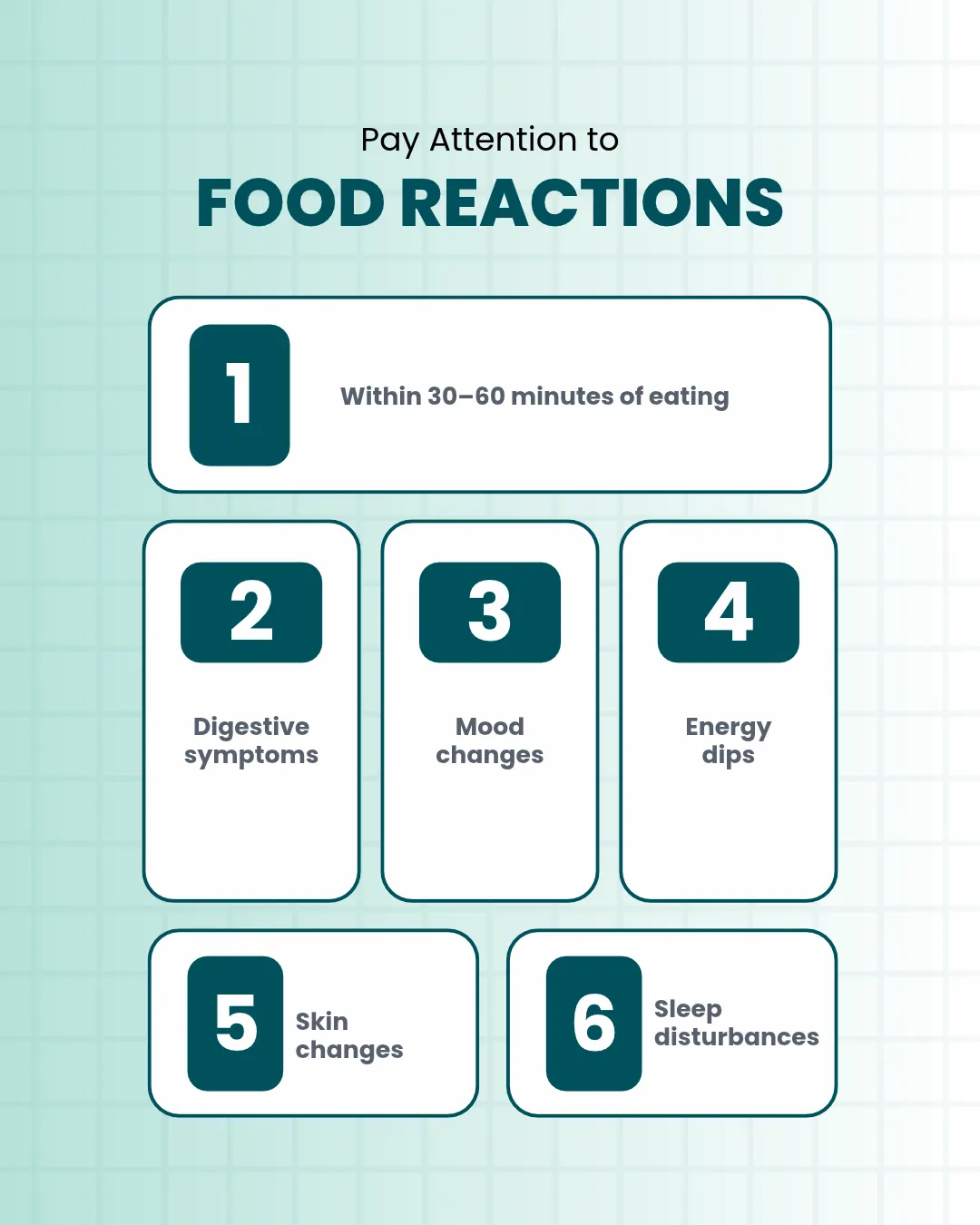
- Within 30–60 minutes of eating: Most food reactions appear 30 to 60 minutes after eating. This is the easiest time to notice how your body reacts.
- Digestive symptoms: Stomachaches, bloating, gas, or even nausea can be signs that your body is struggling with what you ate.
- Mood changes: Some foods can make you feel happier or more energetic, while others might make you feel sad or anxious.
- Energy dips: If you feel tired or sluggish after eating, it might be a clue that your meal didn’t suit your body.
- Skin changes: Breakouts, rashes, or redness could be from something in your meal.
- Sleep disturbances: Foods that disrupt your sleep can impact your mood and energy the next day. Pay attention to any sleep troubles after eating certain foods.
Why Pay Attention to Food Reactions?
Understanding food reactions helps identify intolerances or sensitivities, improves digestion, balances mood, and boosts energy levels. Food reactions can be subtle, but paying attention to them can lead to significant improvements in your physical wellness and mental well-being. Here's how:
- Better Digestion: By knowing what foods upset your stomach, you can avoid discomfort and bloating.
- Improved Energy Levels: Eating the right foods can help sustain energy and prevent afternoon slumps.
- Better Skin: Observing how your skin reacts to different foods can help avoid breakouts and improve complexion.
- Enhanced Mood and Sleep: Certain foods can influence how you feel emotionally and affect your sleep quality. Choosing foods that enhance mood and promote restful sleep can make a big difference.
How to Track Food Reactions
Start by keeping a simple food diary. Note down what you eat and how you feel afterward. Follow these steps to make it easy:
- Write it down: Keep track of meals and snacks in a notebook or on your phone.
- Note the time: Record the time you ate and when the symptoms started.
- Observe patterns: After a week, look for patterns. Which foods commonly cause reactions?
- Consult a professional: If you discover consistent reactions, consult a healthcare professional.
Experiment and Adjust
Once you have identified some possible triggers, try removing or adjusting them. Here’s how:
- Elimination: Cut out the suspected food for a period and see if symptoms improve.
- Choose Alternatives: Look for substitutes that don’t cause reactions.
- Monitor: Keep notes on any changes in your symptoms.
Conclusion
Recognizing food reactions is a valuable tool for building better health. By paying attention to how your body responds to specific foods, you can boost your wellness and enjoy life more fully. Start noticing, tracking, and adjusting today. Your body will thank you!